What Does X Match Mean in Family Tree Dna
We are reinventing the mode you see your ancestry — through science.
Your DNA can tell yous more
about your family history.
add to cart add to cart USD$99
We are reinventing the manner yous see your ancestry — through science.
Your DNA can tell yous more
well-nigh your family history.
add to cart add to cart USD$99
Discover more about your Deoxyribonucleic acid story.
More regions. More than connections. More ways to discover what makes you, you.
Experience your ancestry in a
whole new style.
Click to explore our service below.

Now with 2000+ regions Beginnings Composition
Find where your Deoxyribonucleic acid is from out of 2000+ regions worldwide - and more.
Larn more

Family Tree
Our Ancestry + Traits Service at present includes our new automatic family tree builder.

Dna Relative Finder
Opt-in to connect with people who share DNA with you - and message them.
Learn more
Trait reports
Learn how your DNA influences your facial features, gustatory modality, olfactory property and other traits.
Learn more
Maternal & Paternal Haplogroups
Trace parts of your ancestry to a specific group of individuals from 1,000+ years agone.
Learn more

Neanderthal Beginnings
Discover how much Neanderthal DNA y'all inherited.
Learn more

Now with 2000+ regions
Beginnings Limerick
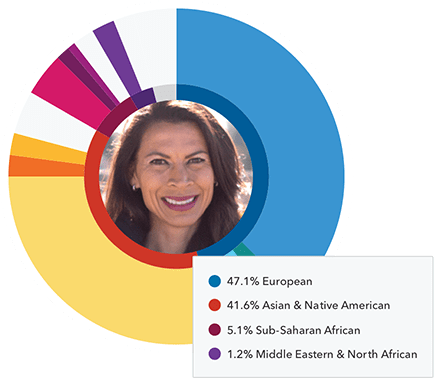
Run across how your Dna breaks out across our 2000+ regions worldwide.
- Learn well-nigh your ancestral origins.
- See where your ancestors lived 500+ years ago.
- Utilise your DNA findings to travel to the places that make yous, you.
Acquire more
Ancestry Composition
- Larn about your bequeathed origins.
- Run into where your ancestors lived 500+ years ago.
- Apply your DNA findings to travel to the places that make yous, y'all.
Family unit Tree
- Yous don't take to exist a genealogist to build your family tree.
- Automatically start your family tree using your Deoxyribonucleic acid.
DNA Relative Finder
Opt-in to connect with people who share Deoxyribonucleic acid with you - and message them.
- Discover Dna relatives from around the world.
- Choose to message and meet relatives - maybe even hear new family stories, share photos and get a amend understanding of your family's history.
Larn more
Trait reports
- Our Ancestry + Traits Service includes 30+ trait reports at no additional toll.
- Compare your results to other 23andMe customers.
Larn more
Maternal & Paternal Haplogroups
Trace parts of your ancestry to a specific group of individuals from i,000+ years ago.
- Understand how the migration of our Dna tells the story of your ancestors.
- Learn the origins of your maternal and paternal* ancestors.
*Women tin only trace their paternal haplogroup by connecting to a male relative — such as a father, brother or paternal male cousin.
Learn more
Neanderthal Beginnings
Discover how much Neanderthal DNA you inherited.
- Notice out how much of your Deoxyribonucleic acid is derived from Neanderthals.
- Encounter how your Neanderthal limerick compares to others.
- Larn which traits your Neanderthal DNA is associated with, similar height and dorsum pilus.
Learn more
Feel your ancestry in a
whole new way.
Click to explore our service below.
Ancestry Composition
Haplogroups
Neanderthal Ancestry
Deoxyribonucleic acid
Relatives
Run across how your Dna breaks out across our 2000+ regions worldwide.
- Learn virtually your ancestral origins
- See where your ancestors lived 500+ years ago
- Come across how each of your biological parents contributed to your Ancestry Limerick (feature available when connected with one genotyped parent).
Learn more
Trace parts of your beginnings to a specific grouping of individuals from 1,000+ years ago
- Understand how the migration of our Deoxyribonucleic acid tells the story of your ancestors
- Learn the origins of your maternal and paternal* ancestors
- Women can but trace their maternal haplogroup
Learn more
Explore genetic similarities and differences between you and your relatives
- See how different ancestries have traveled through generations of your family.*
- Requires relatives to be genotyped
- Share reports with family and friends (even if they are non customers!)
Notice how much Neanderthal DNA you inherited!
- Notice out how much of your Deoxyribonucleic acid is derived from Neanderthals
- See how your Neanderthal composition compares to others
- Larn which traits your Neanderthal DNA is associated with, like height and dorsum hair
Learn more
Opt-in to connect with people who share Dna with you - and message them!
- Dna Relatives carousel copy
- Find Dna relatives from around the globe
- Choose to message and meet relatives - maybe even hear new family unit stories, share photos and go a better agreement of your family unit's history
Learn more
76-twelvemonth-old woman finds
her birth family after
a twoscore-year search
Play video
Where in the globe is your DNA from?
Your Dna can tell you where your ancestors lived more than 500 years ago. Explore your ancestry'south breakdown by region, including East asia, Sub-Saharan Africa and Europe, with results condign more refined equally our database continues to grow.
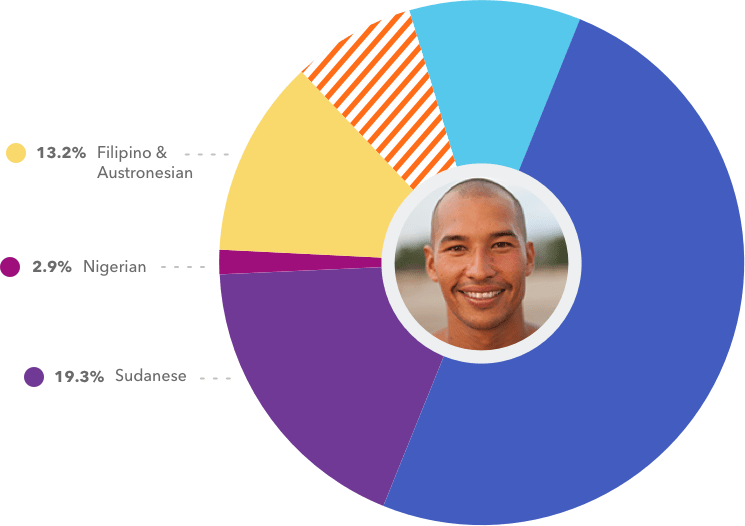
Trait Reports
30+ reports
Observe out your likelihood of having sure characteristics. See how your Dna affects your pilus color, gustatory modality preferences and more than. You tin as well compare your results to other 23andMe customers.
Reports include
- Hair: Colour, Curliness, Male Bald Spot
- Gustatory modality & Odor: Sweet vs. Salty, Biting
- Facial Features: Cheek Dimples, Unibrow, Freckles
- See all traits
Accept a closer await at a written report.
Overview
Come across how likely yous are to have the trait and how your prediction compares to other groups.
About the trait
Learn how the trait develops, how information technology evolved and other contributing factors.
Accept activity
Take the side by side step past sharing, comparing or learning more about your results.
What if you lot could travel there?
Larn more than well-nigh how you can embark on a DNA travel adventure based on your 23andMe Ancestry Composition results.
Your Ancestry Timeline
Traced through the generations
Discover when different ancestries were introduced into your DNA. Learn how many generations ago you had an ancestor that was descended from a single population or ethnicity.
A new social network, with a genetic twist.
Explore your Deoxyribonucleic acid Family! We all take our immediate, biological or adopted families...but did you know y'all could also share Deoxyribonucleic acid with other 23andMe customers - your Dna Relatives?
With this unique (and anonymous) written report, see how many Deoxyribonucleic acid Relatives yous accept around the earth - or here in the US! View all the places your DNA Relatives call home.
And if you want to dig deeper, you lot can opt-into our Deoxyribonucleic acid Relatives tool to find, connect and message those who share Deoxyribonucleic acid with you lot.
Discover DNA relatives across the globe or across the street.
Find other 23andMe customers who share your Dna and ancestors. Explore matches that range from shut family to distant relatives and make new connections. Shed new light on your family story past discovering a new relative nearby or somewhere around the world. Yous can always choose to opt in or out of this tool.
The difference is in our Deoxyribonucleic acid
Some of our about innovative ancestry features that let you drill down into the details:
- Inheritance Tracing: Trace how certain populations were passed down through unlike generations – which is more interesting if you lot have family unit members in the database
- Ancestry percentages to the 0.1%: We provide estimates of your ancestry percentages downwardly to the 0.1%, and we likewise give you the option to explore results with different confidence levels
- Breakdown of ancestry: See how your Deoxyribonucleic acid breaks out across our 2000+ regions worldwide
- Compare Deoxyribonucleic acid Relatives' segments: In the DNA Relatives tool, run across overlapping chromosome segments betwixt y'all and your matches and compare them with upward to 5 other matches at a time to help yous triangulate new relatives for your family unit tree
Map your ancestry.
Go farther dorsum.
Discover the origins of your maternal (your mother's female parent'due south mother'south…) and paternal (your father'south father'southward male parent'southward…) ancestors and how they moved around the world over thousands of years.
We study on your maternal and paternal lineage by identifying your haplogroups. A haplogroup can trace office of your ancestry back to a specific group of individuals in the distant by.
Women tin only trace their maternal haplogroup. This is considering the paternal haplogroup is traced through the Y chromosome, which women exercise not inherit.
Information for women 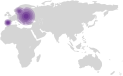
More on: results for women.
The vast bulk of our features, including the Beginnings Composition report and DNA Relatives tool, are based on autosomal DNA. Autosomal Deoxyribonucleic acid is inherited from both parents, and women receive all these reports and tools.
While men tin can trace both their maternal haplogroup (from mitochondrial DNA) and their paternal haplogroup (through the Y chromosome passed downwardly from their father), women can only trace their maternal haplogroup (through the mitochondrial Deoxyribonucleic acid passed down from their mother). This is because the paternal haplogroup is traced through the Y chromosome, which women practise not inherit.
Keep in listen that haplogroups are one small part of your beginnings assay. If a male relative such every bit your male parent, brother, paternal uncle or paternal male cousin were genotyped, your ain paternal haplogroup information could be inferred from whatsoever of them.
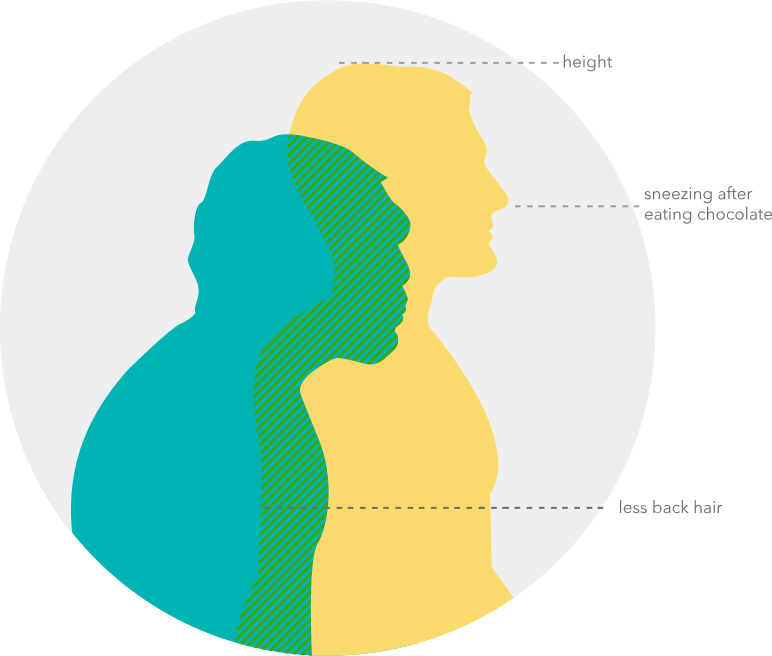
Find out if y'all're a little bit Neanderthal.
Even though Neanderthals vanished about 40,000 years ago, their Deoxyribonucleic acid lives on in us. Enquiry tells us that they interbred with humans around threescore,000 years ago.
23andMe can tell y'all how much of your Deoxyribonucleic acid is derived from Neanderthals and how that compares to others. We tin fifty-fifty signal to specific Neanderthal DNA that is associated with traits that you might accept – similar height and dorsum pilus.
Hello. Notwithstanding have questions about our ancestry features?
Here are just a few of the things people frequently ask nearly 23andMe.
If you don't come across your question here, go far impact with u.s..
Some ancestry services are records-based, which means that they assist y'all search historical records such as birth, death and marriage certificates, to trace your lineage. 23andMe offers genetics-based ancestry reports and tools, which ways that we clarify your DNA to trace your lineage.
With 23andMe, you tin wait deeper into your personal history to learn what percentage of your DNA comes from populations around the earth, find your DNA relatives, learn almost your maternal and paternal lineages and fifty-fifty see how much of your Deoxyribonucleic acid comes from Neanderthals.
The 23andMe Deoxyribonucleic acid database has more than 5 million genotyped customers worldwide. You volition continue to find new relatives as our database grows over fourth dimension.
Many people benefit from finding new family members – from those who fill in details of their family unit trees to adoptees finding their biological family.
If you opt in to Deoxyribonucleic acid Relatives, you lot will be able to ship and receive invitations to connect with other customers who share DNA with you. Y'all can choose whether to respond to these invitations or not, and your DNA relatives have the same choice. We cannot guarantee that they will respond to your sharing invitations or messages. Regardless of whether you both hold to share, you volition be able to see their birthplace, locations of their ancestors and surnames, if they have chosen to add this information to their contour. If you both accept sharing invitations, you will be able to meet ancestry reports and overlapping chromosome segments.
In rare cases, participation in DNA Relatives may reveal that you are related to someone unexpected, or that you are not related to someone in the style that you expected. Consider this before y'all opt in to this feature.
Your beginnings results are based on a few different types of Dna—Deoxyribonucleic acid inherited from both of your parents (chromosomes 1-22), Y chromosome Deoxyribonucleic acid and mitochondrial Deoxyribonucleic acid.
DNA that y'all inherit from both parents is called autosomal DNA. Since you inherit approximately one-half of this blazon of DNA from each parent, it reflects recent ancestry from both sides of your family tree. The vast majority of our features, including our Ancestry Composition report and DNA Relatives tool, are based on autosomal DNA.
Haplogroups are a different story. Your maternal line haplogroup assignment is derived from a split up piece of Deoxyribonucleic acid called the mitochondria. Since mitochondria is passed on only by mothers to their children, your maternal line haplogroup assignment simply tells y'all about your female parent's side of the family unit. Similarly, the paternal line haplogroup consignment is derived from a dissimilar, separate slice of Deoxyribonucleic acid called the Y chromosome. The Y chromosome is just passed from fathers to sons and merely traces the paternal line.
Haplogroups are mainly used for doing anthropological research of fourth dimension frames long earlier the adoption of surnames. Haplogroups are merely pointers to a big geographic area of the world where that haplogroup is found in high frequency.
Some genetic ancestry services simply provide autosomal Dna analysis or charge you separately for the maternal and paternal haplogroup data. 23andMe includes all of these for a single toll.
Discover more than nigh
your Dna story.
More regions. More connections. More ways to notice what makes y'all, you.
Ancestry + Traits Service
USD$99
Ancestry Composition
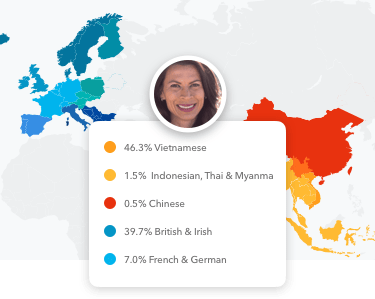
Detect where your Deoxyribonucleic acid is from out of 2000+ regions worldwide - and more.
Your Deoxyribonucleic acid can tell you where your ancestors lived more than 500 years ago. Explore your ancestry'southward breakdown by region, including East Asia, Sub-Saharan African and Europe, with results becoming more than refined as our database continues to abound.
What if you could travel there? Acquire more about how you can embark on a Deoxyribonucleic acid travel adventure based on your 23andMe Ancestry Limerick results.

Trait reports
Learn how your Dna influences your facial features, taste, smell and other traits.
xxx+ reports
Find out your likelihood of having certain characteristics. See how your DNA affects your hair colour, gustatory modality preferences and more. Yous tin can also compare your results with other 23andMe customers.
Reports included
- Hair: Colour, Curliness, Male person Bald Spot
- Taste & Odour: Sugariness vs. Salty, Bitter
- Facial Features: Cheek Dimples, Unibrow
- sample report
- Power to Match Musical Pitch
- Asparagus Odor Detection
- Back Hair (available for men just)
- Bald Spot (available for men only)
- Bitter Taste
- Bunions
- Cheek Dimples
- Cilantro Taste Disfavor
- Cleft Chin
- Dandruff
- Earlobe Type
- Early Hair Loss (available for men only)
- Earwax Blazon
- Heart Color
- Fear of Heights
- Fright of Public Speaking
- Finger Length Ratio
- Apartment Feet
- Freckles
- Hair Photobleaching (hair lightening from the dominicus)
- Hair Texture
- Hair Thickness
- Ice Cream Flavor Preference
- Light or Night Pilus
- Misophonia (hatred of the sound of chewing)
- Musquito Bite Frequency
- Motion Sickness
- Newborn Hair
- Photic Sneeze Reflex
- Crimson Hair
- Skin Pigmentation
- Stretch Marks
- Sweet vs. Salty
- Toe Length Ratio
- Unibrow
- Wake-Up Time
- Widow'south Peak
DNA Relative Finder
Connect with people who share Dna with you.
Find other 23andMe customers who share your DNA and ancestors. Explore matches that range from close family to distant relatives and make new connections. Shed new light on your family story by discovering a new relative nearby or elsewhere around the world. You can always choose to opt in or out of this tool.
Expand content Maternal & Paternal Haplogroups
Trace parts of your beginnings to a specific group of individuals from i,000+ years ago
Find the origins of your maternal (your mother'due south female parent'south mother's…) and paternal (your father's father'southward father's…) ancestors and how they moved around the world over thousands of years.
We report on your maternal and paternal lineage by identifying your haplogroups. A haplogroup can trace role of your beginnings back to a specific grouping of individuals in the distant past.
Women tin but trace their maternal haplogroup. This is considering the paternal haplogroup is traced through the Y chromosome, which women do not inherit.
More than about results for women
The vast majority of our features, including the Ancestry Composition study and DNA Relatives tool, are based on autosomal DNA. Autosomal Dna is inherited from both parents, and women receive all these reports and tools.
While men can trace both their maternal haplogroup (from mitochondrial Dna) and their paternal haplogroup (through the Y chromosome passed down from their male parent), women can only trace their maternal haplogroup (through the mitochondrial DNA passed downwardly from their mother). This is because the paternal haplogroup is traced through the Y chromosome, which women practise non inherit.
Keep in heed that haplogroups are one pocket-size part of your beginnings assay. If a male person relative such as your male parent, brother, paternal uncle or paternal male cousin were genotyped, your own paternal haplogroup information could be inferred from whatever of them.
Neanderthal Beginnings
Discover how much Neanderthal DNA you inherited
Fifty-fifty though Neanderthals vanished about 40,000 years ago, their Deoxyribonucleic acid lives on in the states. Research tells united states of america that they interbred with humans effectually 60,000 years agone.
23andMe tin tell you how much of your Dna is derived from Neanderthals and how that compares to others. We can even bespeak to specific Neanderthal DNA that is associated with traits that you might have – like height and back hair.
Raw data included 
Raw data is for information purposes only; must not be used for medical or diagnostic purposes.
Source: https://www.23andme.com/en-int/dna-ancestry/
0 Response to "What Does X Match Mean in Family Tree Dna"
Post a Comment