How Do You Make Velcro Sticky Again
When you're creating crafts, Velcro can aid minimize your workload hugely. Velcro works by speedily and deeply fastening items together, allowing yous to both attach and pull apart cloth. Securing Velcro to fabric by sewing can create a strong bond only can be labor-intensive, particularly on larger projects.
That said, the question of how to adhere Velcro to textile without sewing can be hard for some traditional crafters to become their caput around... here, we take a expect at some of the key information you lot need to know to make the process a breeze.
Gluing Velcro to Fabric 101
How do Y'all Get Velcro to Stick to Textile?
Applying Velcro to fabric requires minimal skill, minimal effort, and minimal time (which, in a nutshell, is its beauty). The only thing you really need to think virtually is the all-time way of applying the Velcro in the first case. Methods are variable, with the best option actually depending both on personal preference and the individual job at hand.
- Sewing: for traditional crafters, sewing is often the get-to method of choice. While quicker methods exist, sewing does have the advantage of providing incredibly secure results, as well every bit quick, painless removal should y'all ever make up one's mind to remove the Velcro.
- Cloth-based tape: If you'd rather non sew the Velcro to your fabric, fabric tape can be used to great effect instead. The method uses an easy-skin and sticks technique that allows the Velcro to instantly bond to the textile with no additional stride (such as sewing, gluing or ironing) required. Simply cut the tape to the required size, peel the liner away, and stick it to clean dry fabric. Leave information technology to prepare for 24 hours and you're expert to go.
- Gluing: A popular culling to both sewing and fabric-based tape is gluing. Fortunately, there'southward a range of Velcro adhesives on the marketplace congenital for that verbal purpose… if you lot have a gum gun, you tin can fifty-fifty accept things up a notch with hot gluing.
Does Self-Agglutinative Velcro Stick to Fabric?
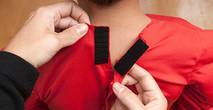
Cocky -adhesive Velcro volition stick to many types of fabric with swell success. Still, there'south a caveat. About generic adhesive-backed hook and loop products have a rubber or acrylic-based adhesive, neither of which bond to fabrics specially well.
For crafting purposes, you'll need to invest in an adhesive-backed Velcro designed specifically for use on fabrics. The Velcro can be bought online or at certain superstores like Walmart or Dwelling house Depot. Before you make your buy, check the pack and make sure the Velcro is intended for utilize on material: anything else will inevitably finish in thwarting and several dollars' worth of wasted money.
Can Velcro be Glued to Fabric?
Using mucilage on material can feel slightly alien, but provided yous use fabric glue, information technology can really make the job of adhering Velcro to material incredibly quick and piece of cake. Fabric glues won't soak or stain your fabric and can be used on even the about fragile of fabrics like lace. Getting to grips with the right gluing technique is simple (more than on which coming up), and once you've got it down, you find gluing a fast, flexible solution.
How to Mucilage Velcro to Fabric
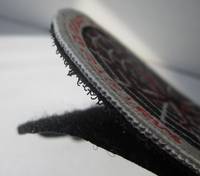
Gluing textile to Velcro is quick, simple, and, once you've got the hang of it, as easy as pie. Follow these simple tips for flawless results.
-
Cull a flat surface to work on.
-
Turn the Velcro over and apply a line of glue, slowly and carefully, from the heart to the edge.
-
Remember that glue will spread one time you stick the Velcro to the textile, and then avert calculation too much.
-
As you apply the gum, leave a seam assart on either side of the Velcro. This will foreclose it from seeping onto the fabric.
-
Cheque the instructions on the glue for drying times.
-
Leave the fabric for equally long as directed, or until fully dry out.
-
If necessary, y'all can add stitches later to reinforce the attachment.
Handy hint: when yous pull the glue tube away from the chore, you'll often get a fine string of gum that comes with you. Keep a paper towel handy to quickly wipe up the excess.
How to Remove Velcro Mucilage From Material
Removing Velcro glue from cloth tin be a hassle, but it's not impossible. How successful you lot'll exist at removing the glue stain will depend both on the fabric itself and the blazon of glue that was used. For your all-time chance of success, endeavour one of the following methods :
Citrus Adhesive Remover Method
- Peel the Velcro strip from the fabric using a plastic putty knife, a scooper, apartment-edged metallic or the end of a fork. Exist careful to accept your time and skin gently to avoid damaging the underlying fabric.
- Once you've removed the Velcro strip from the fabric, use a citrus adhesive remover to the peeled part.
- To help the adhesive penetrate, use a putty knife to button the remover into the peeling edge of the strip.
- Grip the edge of the Velcro strip with pair of scissors and slowly being pulling the peeling corner away from the textile. As you pull the strip, go on to apply adhesive remover. Proceed the process until both the Velcro and adhesive have been successfully removed.
Tip: before applying agglutinative remover, spot exam the fabric to ensure it won't cause harm.
The Freezing Method
- Elevator abroad any backlog glue using a putty knife or plastic scraper.
- Place the fabric in the freezer for at least an hr.
- Once the glue is frozen solid, you should be able to simply pause it away from the fabric.
- Spot clean the expanse with a solvent or stain remover to go rid of any remaining stains.
The Acetone Method (best for hot gum gun stains)
- Place a towel nether the glue stain.
- Dip a cotton swab in acetone.
- Working from the exterior of the stain to the within, dab the glue stain with the cotton swab.
- As the mucilage transfers from the fabric to the cotton fiber swap, change the swab for a clean one and continue to work your way to the centre of the stain.
- Once the glue is removed, launder the cloth as normal.
Depending on the fabric and glue, some stains but can't exist removed, no matter how difficult you endeavor. If all the above methods fail to evangelize the results y'all want, yous may have to consider either giving it up as a lost cause or find a way to repurpose the material.
Tin You lot hot Glue Velcro to Fabric?
Hot mucilage is a great option for gluing Velcro to material. The method is very like to using standard mucilage, with a few tweaks here and in that location:
- Prep your fabric before you lot start.
- Switch on the glue gun and let the mucilage estrus (unless you lot desire a sticky mess, don't apply before the glue is hot and free-flowing).
- One time the gum has heated to the optimal temperature, apply the glue directly to the Velcro in sparse lines, leaving some space on either side of the Velcro to allow for the glue to spread without seeping onto the textile.
- Apply the Velcro to the cloth using light pressure.
- Leave to dry.
What Fabric Does Velcro Stick to Best?
Velcro will stick to nigh fabrics but not all. Fabrics that work best with Velcro have either a series of small loops on the surface or a pile the Velcro can "catch" onto.
Typically, you lot shouldn't have whatever trouble in attaching Velcro to:
- Wool
- Fleece
- Loose-looped felt
- Looped nylon fabrics
- Some microfiber fabrics
- Velvet
- Some knit fabrics
When applying hook sided Velcro to sure fabrics not listed above, carry in mind the constant attaching and detaching can stress the textile and cause it to develop an unsightly fuzzy advent.
Which Side of Velcro Goes on Cloth?
Velcro hook and loop fasteners come with two layers: a hook side and a loop side. When the 2 side are pressed together, the hook clutches concord of the loop to form a tight, secure bond.
Hook : the "hook" side of Velcro is the rougher, more rigid side of the textile. "Hook" is the side that catches onto the "loops".
Loop : the "loop' side of Velcro is the softer, smoother side.
Which side goes where depends on what you're attaching, but more often than not speaking, the rough "claw" side should go onto the fabric. So, for example, if y'all're making defunction, the "loop" side should go onto the valance, and the rough side of the fabric adhesive should go onto the pall material.
What to do if The Velcro Adhesive Isn't Sticking?
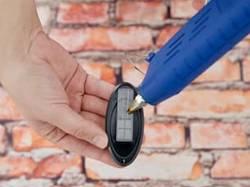
Finding out the agglutinative you've chosen isn't strong enough to bail the Velcro to the textile can exist frustrating. Depending on the surface you're using to stick the adhesive to, y'all may find the Velcro adhesion is stronger than the adhesive, which will brand the adhesive come away earlier the Velcro. If this is the case, y'all may need to reinforce the agglutinative with stitching, nails, staples, or a stronger adhesive (again, the supporting technique you use will need to be tailored to suit the surface in question).
What to if Velcro Stops Bonding
Afterward a while, you may find the Velcro on your fabric loses its secure bond. Usually, this happens when lint or debris gathers on the Velcro and stops the hooks from latching onto the loops.
Even the about high-quality Velcro can be affected, simply fortunately, it can usually be restored to its original status with a quick clean.
Cleaning Velcro With a File Bill of fare
-
Hold one stop of the Velcro's hook side securely confronting a flat surface top.
-
Using the file card, brush away from the mitt holding the Velcro using long, even strokes.
-
Piece of work in one direction to avoid pushing the dirt back into the hooks.
Tip : If you don't have a file card to hand, you could use the same method with a pet brush or a toothbrush instead (although neither are quite equally constructive).
Cleaning Velcro With Duct Tape
-
Cutting a small length of duct record and concord information technology securely between the alphabetize and heart fingers of one hand. The glutinous side should be facing outwards.
-
Using your other hand, secure the Velcro against a flat surface.
-
Roll the duct record downwards the length of the Velcro with firm, fifty-fifty strokes.
-
Replace the duct record with a new piece once information technology becomes covered in droppings, and go along until all debris has been removed.
Is Velcro Agglutinative Waterproof?
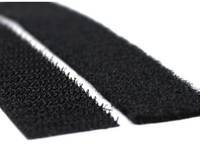
Whether or not a Velcro adhesive is waterproof will actually depend on the blazon you utilize. If you're using Velcro on a garment (or indeed, annihilation else that may come up into contact with water), check the characterization of the adhesive before making your purchase: adhesive designed specifically for fabrics volition typically be waterproof (as volition industrial adhesives) but it's e'er best to double-cheque first to avoid a disaster down the line.
Best Agglutinative for Attaching Velcro to Material
The best adhesive for Velcro really depends on the type of fabric you're using and the type of project you're creating.
Self-adhesive Velcro is a keen option for most types of material (although be conscientious to choose a Velcro specifically designed for fabrics, rather than any one-time type you detect effectually the firm).
Glue is quick, user-friendly, and strong (although on the flip side, it can be tricky to remove).
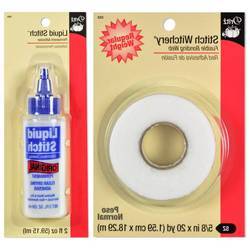
Fifty-fifty after you've chosen your preferred method, you'll still need to choose your product wisely. Although the options and brands available are almost countless, the easiest mode to ensure the adhesive is fit for purpose (especially if you're using a self-adhesive tape) is to bank check the options available from Velcro itself.
Believe it or not, Velcro isn't a product, information technology'southward a make name (what we think of as Velcro is simply "hook and loop fastener"). Velcro carries a number of adhesives that are specifically designed to tackle the job of securing Velcro to fabric, along with a multifariousness of Velcro'southward that range from sticky back (no sewing required) and stitch on (sewing obviously compulsory).
Source: https://sewingiscool.com/how-to-attach-velcro-to-fabric-without-sewing/
0 Response to "How Do You Make Velcro Sticky Again"
Post a Comment